




Galvanized vs Stainless Steel Truck Hardware: Which Should You Choose?
Galvanized vs stainless steel truck hardware: what's the real difference?
Galvanized steel is carbon steel coated with a zinc layer to prevent rust. Stainless steel is an alloy containing at least 10.5% chromium, which forms a self-healing oxide layer. For truck hardware - door locks, hinges, fasteners - the practical difference comes down to four factors: corrosion resistance, cost, strength and service life. In dry freight applications, galvanized hardware typically costs 40-70% less and performs adequately. In refrigerated, coastal or chemical environments, stainless steel lasts 3-5 times longer and is the only reliable choice.
Is stainless steel worth the extra cost for truck parts?
Stainless steel truck hardware costs roughly 2-4 times more than galvanized equivalents, but in corrosive environments it pays for itself. A galvanized cam door lock on a reefer body typically fails in 1-2 years from corrosion; a 304 stainless lock lasts 8-10 years. Over a 10-year lifecycle, stainless costs 30-50% less in total (purchase + replacement + downtime). In dry, non-coastal operations, galvanized remains the economical default - there, stainless may never pay back the premium.
Corrosion resistance comparison: how long does each finish last?
| Environment | Galvanized (zinc) | 304 Stainless Steel |
| Dry inland (normal freight) | 5-8 years | 15+ years |
| Road salt (winter regions) | 2-4 years | 10-15 years |
| Coastal / marine | 1-2 years | 8-12 years |
| Reefer / cold storage (condensation + wash-down) | 1-2 years | 8-10 years |
| Chemical / food wash-down | under 1 year | 6-10 years |
Estimates for exterior truck hardware with normal maintenance. Galvanized life depends on zinc coating thickness; stainless assumes 304 grade.
Strength comparison: is stainless steel stronger?
For truck hardware, the practical difference is small. Galvanized carbon steel has slightly higher yield strength (about 10-15% higher than 304 stainless in comparable gauges) and is less expensive to manufacture at thickness. Stainless steel has higher toughness - it resists impact and fatigue better without cracking. For door hinges and locks, both materials are strong enough; the choice is driven by corrosion environment, not raw strength. The exception: 316 stainless (marine grade) is used only in extreme saltwater conditions.
What does 304 stainless steel actually mean?
304 is the most common stainless grade - the "18/8" alloy (18% chromium, 8% nickel). For truck hardware it means: no rust staining, resistant to road salt and cleaning chemicals, maintains appearance, and can be polished to a bright finish. Grade 316 adds molybdenum for saltwater resistance but costs about 30% more. For trucks and trailers, 304 is the standard recommendation; 316 is reserved for boat trailers and marine equipment.
Which parts should always be stainless steel?
- Reefer and freezer hardware - cold room hinges, locks and handles (condensation + wash-down cycles corrode zinc rapidly)
- Food and pharma vehicle hardware - hygiene wash-down environments
- Coastal or island operations - any fleet running near saltwater
- High-end box trailers - where appearance matters for resale value
Which parts can safely stay galvanized?
- Dry freight van hardware - standard rear door locks and hinges in inland operations
- Cargo control - E-track, tie-down rings (interior, low corrosion exposure)
- Curtain sider rollers and buckles - galvanized/zinc-plated is the industry standard
- Budget rebuilds - where cost is the deciding factor and environment is dry
How to tell galvanized and stainless steel apart
Three quick tests:
- Magnet test: galvanized carbon steel is magnetic; 304 stainless is mostly non-magnetic
- Spark test (grinder): carbon steel throws long bright sparks; stainless throws short dull sparks
- Appearance: galvanized has a matte grey crystalline zinc pattern; stainless is smooth and bright, often polished
Cost comparison table
| Part | Galvanized | 304 Stainless | Premium |
| Cam door lock kit (27mm) | $9-15 | $28-62 | 2-4x |
| Truck door hinge (10 inch) | $1.5-3 | $4-7 | 2-3x |
| Paddle lock (toolbox) | $3-5 | $6-9 | 1.5-2x |
| Toggle latch | $1-2 | $3-5 | 2-3x |
Representative ranges from current wholesale pricing; actual prices depend on quantity and specification.
Frequently Asked Questions
Can galvanized hardware be used on refrigerated trucks?
No. The constant condensation and wash-down cycles of reefer operation corrode zinc plating within 1-2 years. Use 304 stainless steel for any refrigerated body hardware.
Does stainless steel rust?
Grade 304 can show "tea staining" (surface discoloration) in harsh marine environments, but this is cosmetic and does not affect function. True rusting indicates the part is not actually 304 grade.
Is zinc plating the same as galvanizing?
Not exactly. Galvanizing (hot-dip or electro) applies a thicker zinc layer for outdoor use; zinc plating is thinner, mainly for indoor or light-duty parts. Both offer less corrosion protection than stainless steel.
Why is stainless steel hardware more expensive?
The alloy itself costs 2-4 times more than carbon steel, and machining stainless is harder on tooling. The price difference reflects material and processing, not margin.
Can I mix galvanized and stainless hardware on the same door?
Technically yes, but avoid direct metal-to-metal contact in wet environments - dissimilar metals cause galvanic corrosion. Use isolation washers or stick to one material per assembly.
What Ganland offers in both finishes
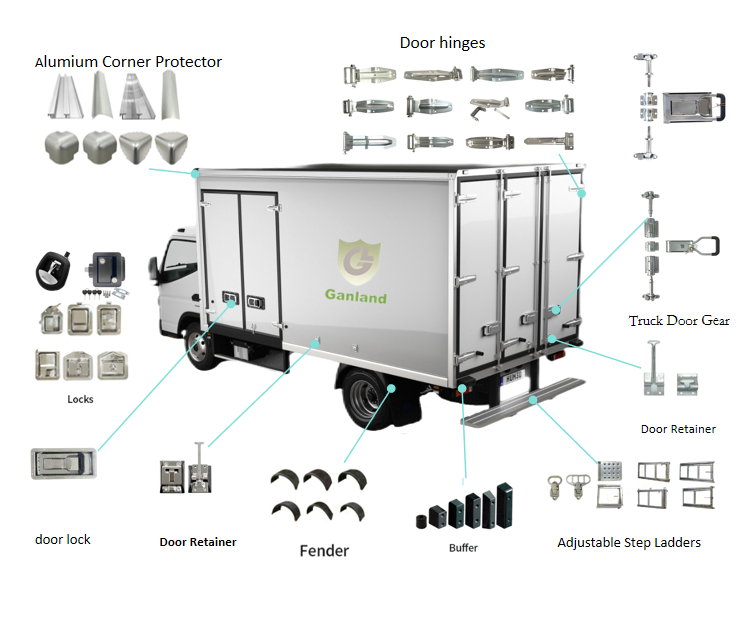
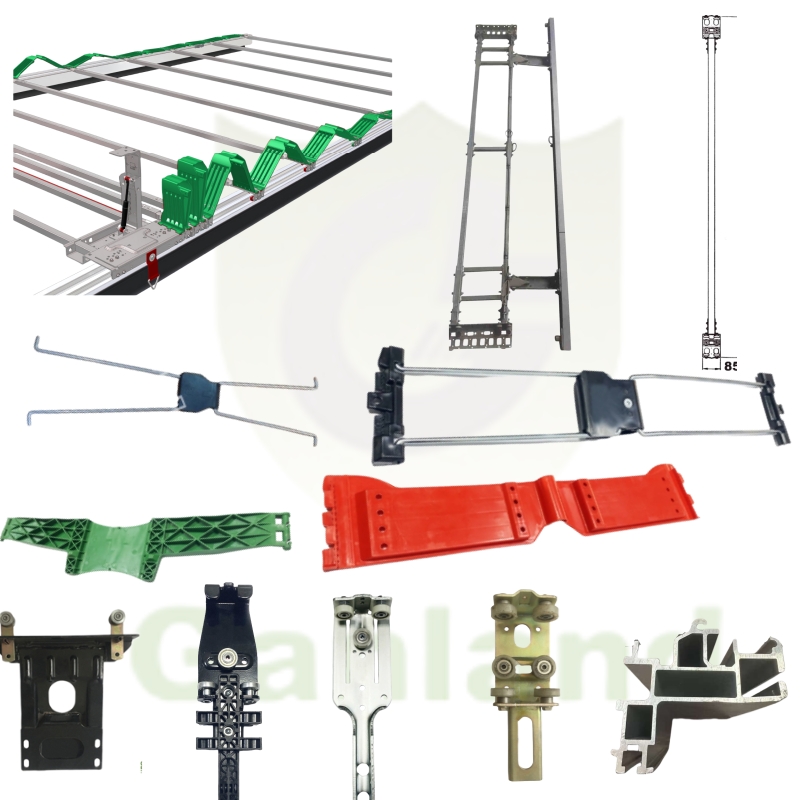
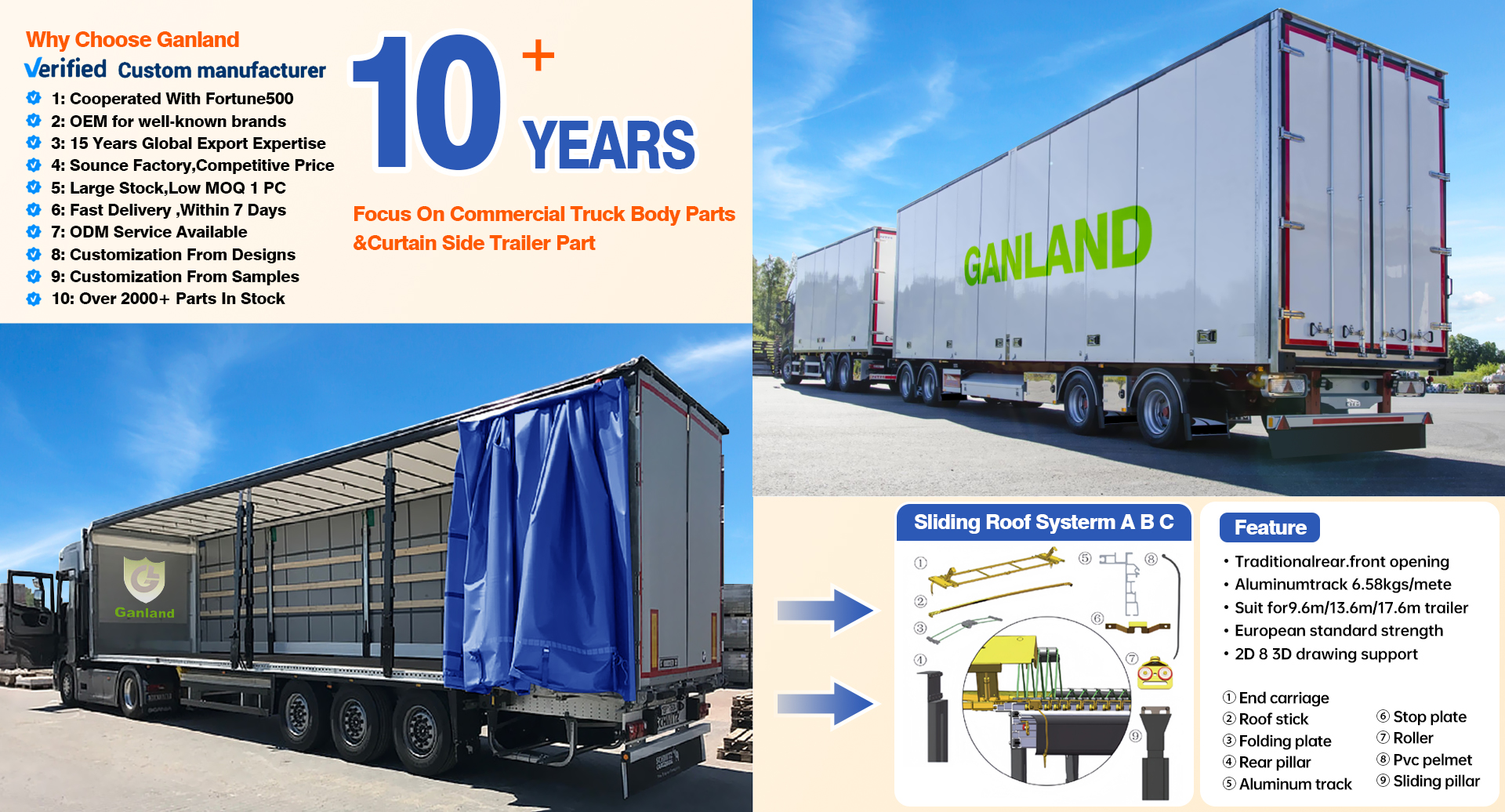
Ganland Auto Parts manufactures the same truck hardware range in both galvanized and 304 stainless steel: cam door locks (16/21/27/34mm), door hinges (6-12 inch), toolbox locks and paddle latches, toggle latches and spring bolts, curtain sider rollers.
All parts available with custom manufacturing to your technical drawings. 8-year Gold Supplier, exports to 60+ countries. Request a quote at sales3@gl-truck.com or WhatsApp +86 173 6732 1309. If you are unsure which finish fits your operation, send us your application details and we will recommend the right material.
Related Posts